Sunflower Oil Production Line Overview
Sunflower oil is a common vegetable oil extracted from sunflower seeds. We offer complete sunflower oil production lines with capacities ranging from 1 TPD to 5,000 TPD. The sunflower oil production line includes cleaning, shelling, kernel separation, cooking, pressing, filtering, extracting, refining, and packing. Some steps can be customized based on specific requirements, fully automated or semi-automatic options for varying budget levels.
The sunflower oil extraction method is also customized according to the sunflower oil plant capacity. For the oil mill plants under 50 TPD capacity, the mechanical screw oil pressing is ok. For the oil mill plants with a capacity above 50 TPD, The solvent extraction method is used together with a mechanical press. The sunflower oil mill plants also apply to other vegetable seeds and nuts, such as cottonseeds, peanuts, and palm kernels.
Comprehensive Services
Turnkey Solutions: Design, equipment manufacturing, installation, and commissioning.
Technical Training: Operators receive thorough training for smooth operations.
After-Sales Support: Regular maintenance guide, spare parts supply, and troubleshooting services.
Large Sunflower oil mill plant or small sunflower oil plant.
The equipment and machines needed for a sunflower oil mill plant vary based on the production scale.


Small Sunflower Oil Production Line
For sunflower oil mill plants with a capacity from 1TPD to 50 TPD, the equipment is relatively simple and easy to operate, with low investment costs and considerable profits.
Sunflower Oil Output: 1-50ton/day
Main Equipment: Cleaning/screening machine, seeds cooker, oil expeller, oil filter press, and conveyors.
This sunflower oil production line is effective and affordable, which makes it the ideal choice for small-scale sunflower oil mill plants.

Large Sunflower Oil Production Line
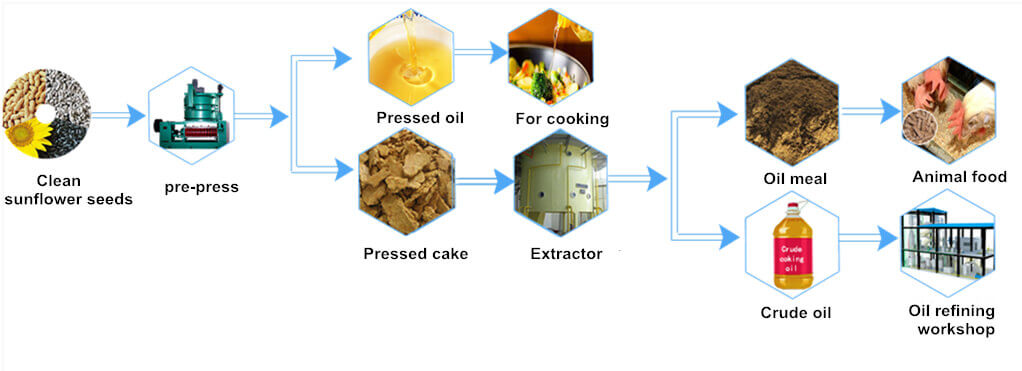
Capacity ranging from 50 TPD to 5,000 TPD. The large-scale sunflower oil production line is designed for the efficient extraction and refining of oil from sunflower seeds. The oil production line integrates sunflower oil mechanical pre-press and solvent extraction and adopts advanced processing technologies and high-performance equipment to produce high-quality sunflower oil for various applications.
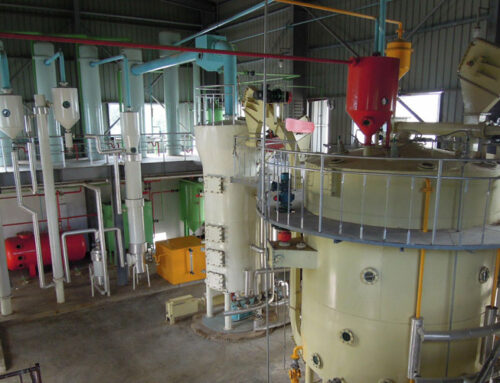
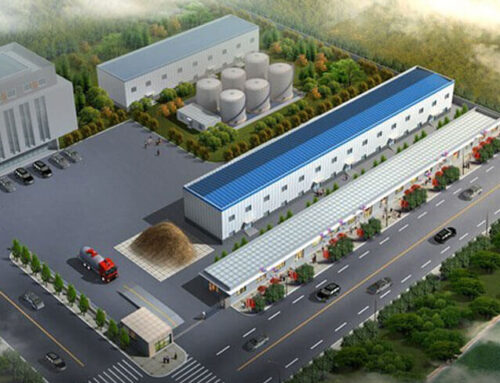
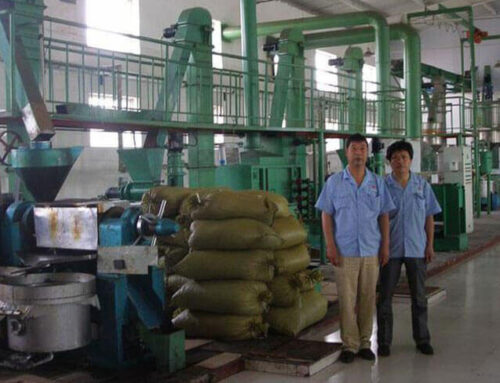
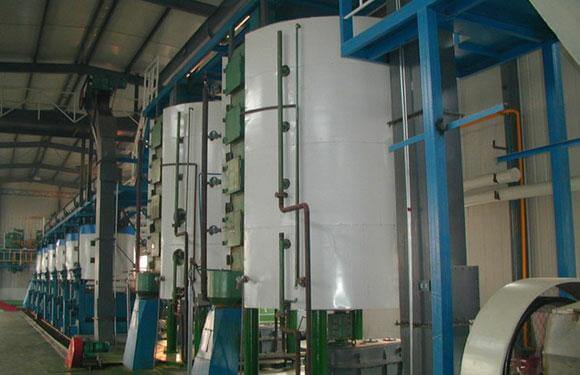
60 TPD Sunflower Oil Production Plant Show
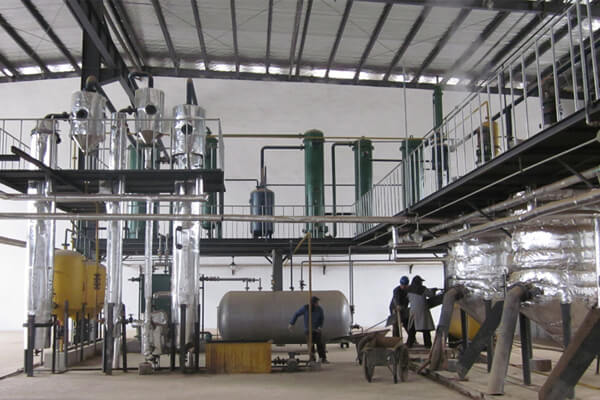
A large-scale sunflower oil production line consists of a sunflower seeds pretreatment and pre-pressing plant, a sunflower oil solvent extraction plant, and a sunflower oil refinery plant. In the whole sunflower oil production line, sunflower seeds should be shelled, cleaned, cooked, and pressed. a sunflower oil solvent extraction plant is used to achieve a high oil yield. Through the sunflower oil solvent extraction process, the oil residue will be less than 1%, and the meal will be more suitable for animal feed. The final sunflower oil product can meet the first-grade oil standard after the process in the sunflower oil refinery plant.
CONTACT US FOR A FREE QUOTE
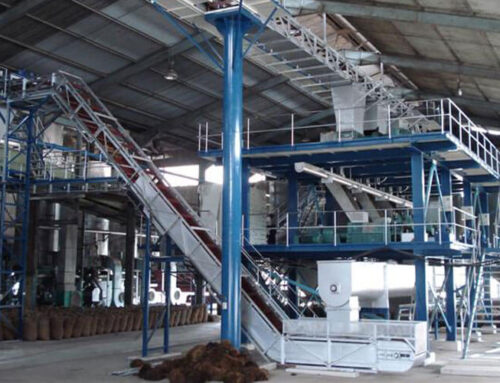
1. Sunflower Seed Cleaning and Preparation

Purpose: To remove impurities such as dust, stones, and plant residues to ensure smooth processing and maximum oil extraction efficiency.
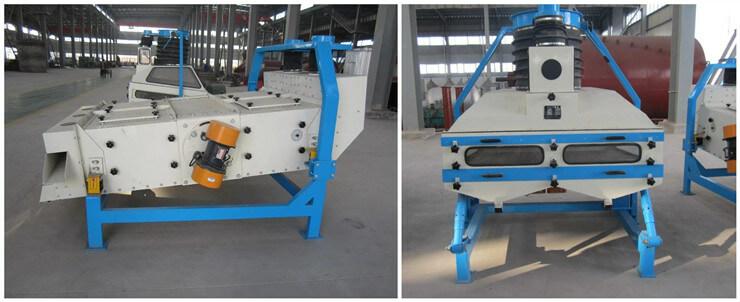
Equipment: Seed cleaning machines, magnetic separators, and destoners.
Process: Sunflower seeds are passed through vibrating screens to remove debris. Magnetic separators are used to eliminate metal particles. The destoners remove stones and other impurities.
Sunflower Seed Drying: Sunflower seeds may require drying to achieve optimal moisture content (around 6–8%). This ensures efficient oil extraction and prevents mold during storage.
Sunflower Seed Storage Silos: Proper storage facilities with temperature and humidity control are essential for maintaining seed quality before processing.
2. Sunflower Seed Dehulling
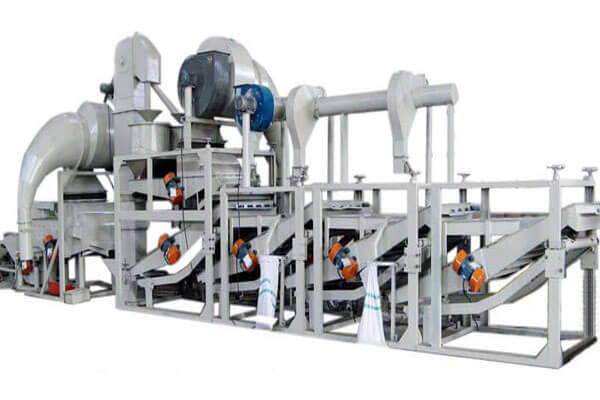
Purpose: To remove the hulls of sunflower seeds, increasing oil yield and reducing fiber content in the meal.
Equipment: Sunflower Seed Dehulling machines and separators. Designed to separate hulls without damaging the kernels, minimize seed loss, and maximize kernel recovery.
Process: The sunflower seeds are cracked open, and the hulls are separated using air classifiers or vibrating sieves. Separated hulls can be used as biomass fuel for boilers or as a feed ingredient. The sunflower kernels contain up to 45–55% oil, making their separation critical for oil extraction efficiency.
3. Sunflower Seed Flaking
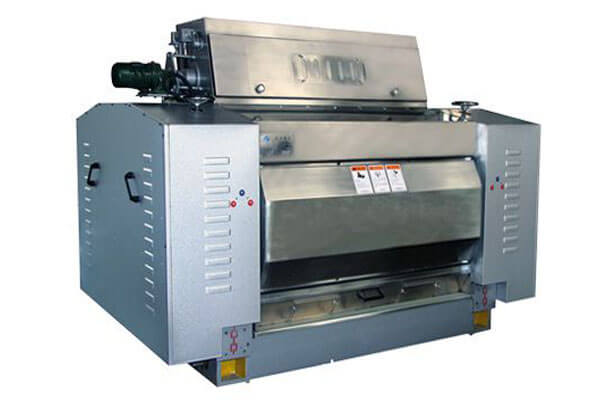
Purpose: To crush the dehulled sunflower seeds into thin flakes, increasing the surface area for oil extraction.
Equipment: Sunflower Seed Flaking Rollers.
Process: Flakes are uniform and thin, typically around 0.25–0.35 mm in thickness. Hydraulic Roll Adjustments ensure consistent flake thickness, improving oil extraction. The rollers can be temperature-controlled to prevent seed overheating.
4. Sunflower Seed Flakes Cooking
Purpose: To condition the flakes by adjusting moisture and temperature for optimal oil extraction.
Equipment: Performed in Vertical or Horizontal Steam Cookers. Have automatic temperature control systems to ensure uniform cooking.
Process: The flakes are heated to 100–120°C, softening the cell walls and releasing oil. Ensures a proper softening of seeds and denatures enzymes that may lead to oil degradation. Improves oil yield, quality, and the structural integrity of the residual meal. Achieving the right moisture level (around 3–5%) is key for efficient oil pressing or solvent extraction.
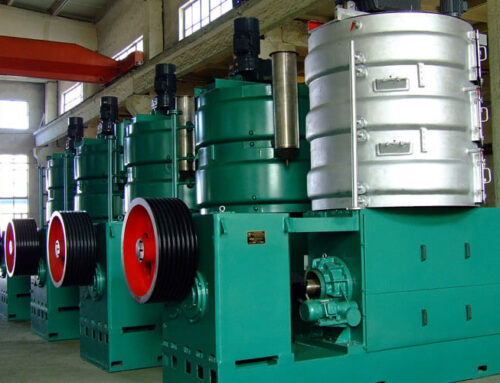
5. Sunflower Oil Mechanical Pressing
Purpose: To physically press oil out of the cooked sunflower flakes.
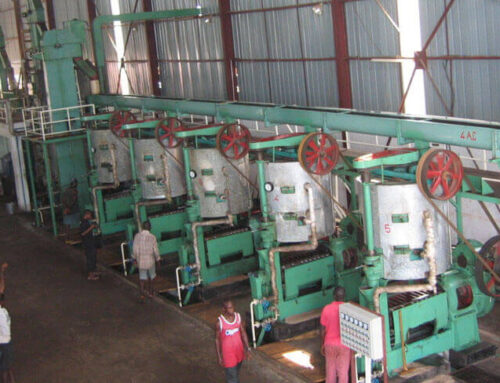
Equipment: Screw oil presses.
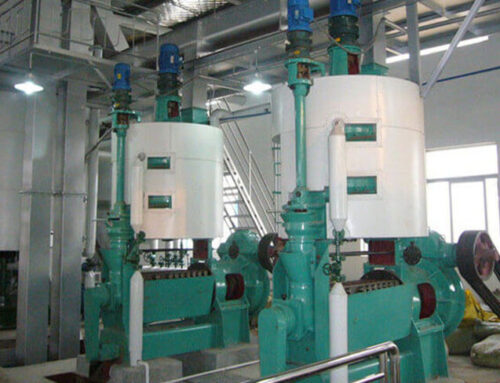
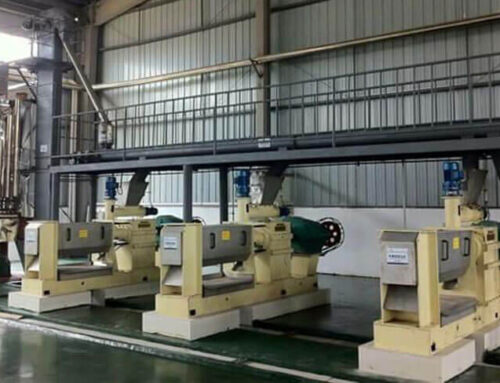
Process: Screw oil press extracts 70–80% of the oil. We offer several types of screw oil presses to meet the various sunflower oil production capacities. If you run a small sunflower oil plant, just use the screw oil press to extract the sunflower oil is the choice. If you want to launch a large sunflower oil production line with a capacity of over 50 TPD, the mechanical pressing will be just a pre-pressing process, followed by an oil solvent extraction plant to extract residual oil from the pressed cakes.
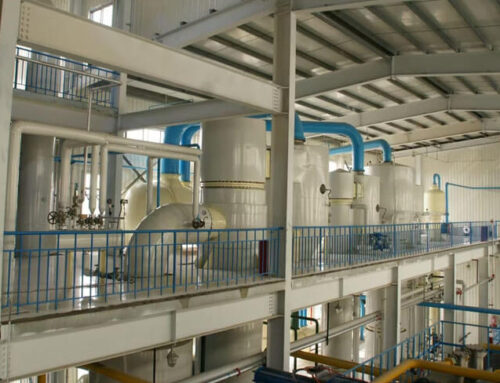
6. Sunflower Oil Solvent Extraction
Purpose: Extract residual oil from the pressed cakes to maximize oil yield.
Equipment: Solvent extractors, Desolventizing equipment, solvent recovery systems.
Process: Use hexane as a solvent for high oil recovery (up to 99%). Ideal for large-scale sunflower oil production to achieve a higher oil recovery rate. Solvent (usually hexane) is sprayed or immersed to dissolve the oil. The desolventizing equipment removes the solvent from the meal and miscella. Uses heat and vacuum to recover the solvent for reuse.

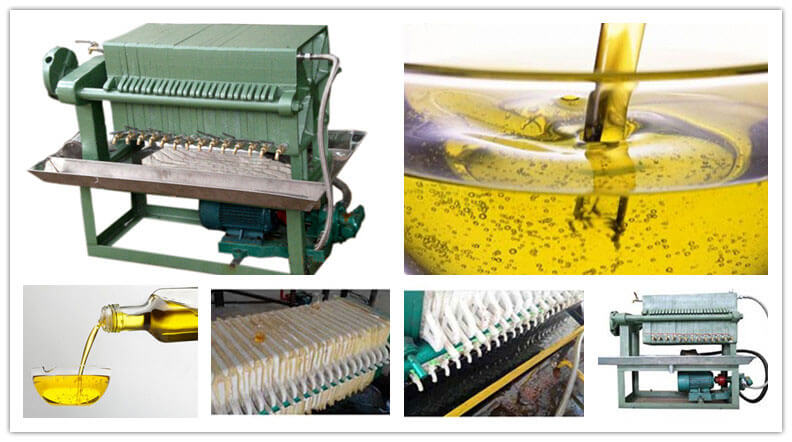
7. Crude Oil Filtration
Purpose: Remove solid particles and impurities immediately from the crude oil obtained during pressing or solvent extraction. Ensures the crude oil is clean and ready for refining.
Equipment: Plate filters or leaf filters.
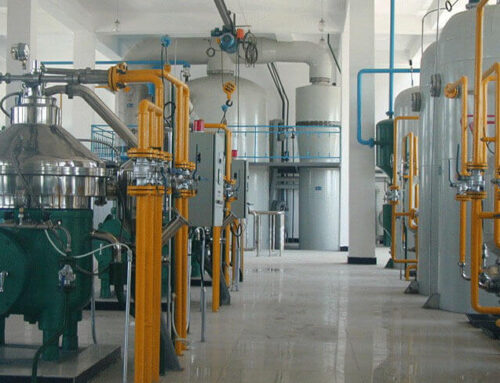
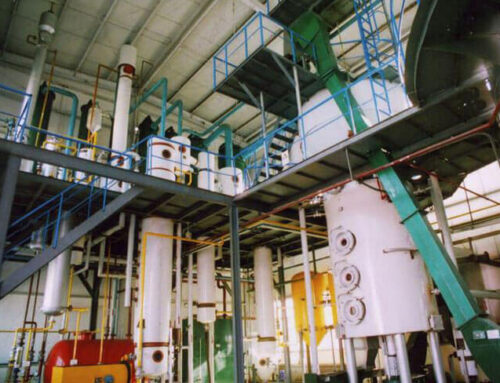
8. Sunflower Oil Refining Process
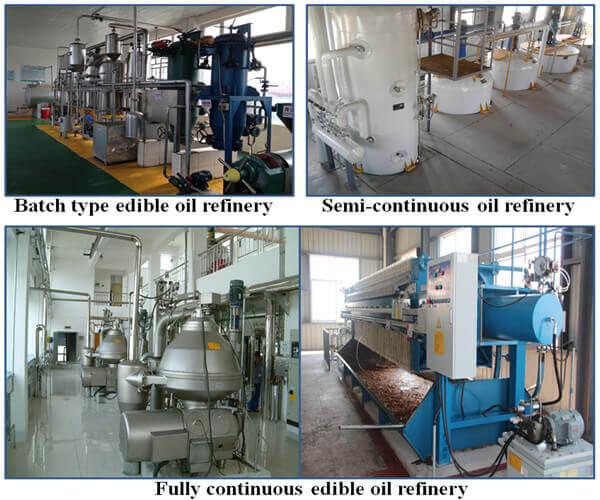
We customize the sunflower oil refining plant to meet customers’ special needs.
Batch type oil refining plant: Capacity is 1~30 TPD. It featured less investment, convenient operation, and a small footprint.
Semi-continuous Oil Refining Plant: Capacity is 30~50 tons TPD. It has the advantages of low power consumption and a better refining rate than batch-type.
Full continuous oil refining plant: Capacity is 50 TPD – 5,000 TPD. With high refining yield and low consumption of auxiliary materials, a full continuous refining process can meet the requirements of deep processing of oil products, which is suitable for large-scale sunflower oil plants.
1. Degumming
Purpose: To remove phospholipids and gums.
Process: Water or acid is added, and impurities are separated by centrifugation.
2. Neutralization (Deacidification)
Purpose: To remove free fatty acids (FFA).
Process: Alkali (e.g., caustic soda) is added to neutralize FFAs, forming soapstock that is separated. The byproduct can be processed further into soap or biodiesel.
3. Decolorization
Purpose: To remove pigments and improve oil clarity.
Process: Activated clay is used to adsorb pigments, followed by filtration.
4. Deodorization
Purpose: To eliminate unwanted odors and flavors.
Process: Oil is heated under vacuum, and steam is used to remove volatile compounds. Heat exchangers are used to recycle heat, reducing energy consumption.
5. Dewaxing (Winterization)
Purpose: To remove waxes, ensuring clarity at low temperatures.
Process: Oil is cooled, and wax crystals are filtered out. Provide precise separation of wax crystals, resulting in clear oil.