Soybean Oil Production Plant Overview
Soybean oil is one of the most widely consumed edible oils globally due to its versatility, high yield, and nutritional value. While, soybean is a low oil content oilseed compared with other oilseeds such as peanut, sesame, and canola. So we adopt soybean pretreatment and solvent extraction methods to process soybean and get soybean oil, which can reduce residue oil rate and increase oil productivity compared with the mechanical pressing method.

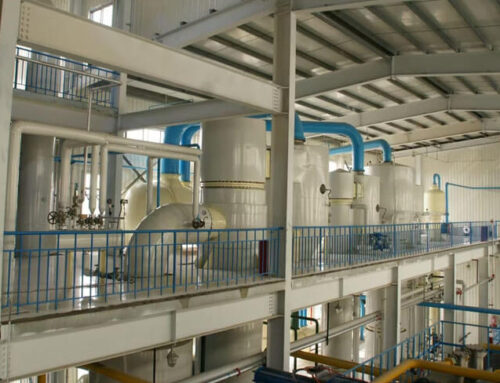
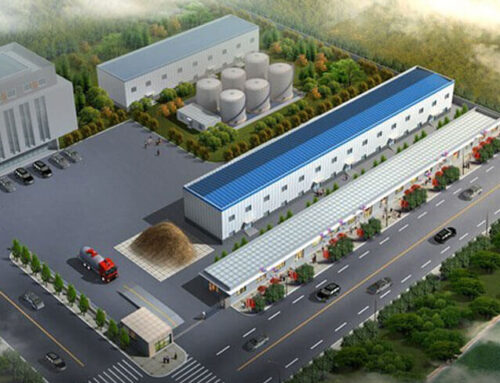
2000 TPD Soybean Solvent Extraction Project
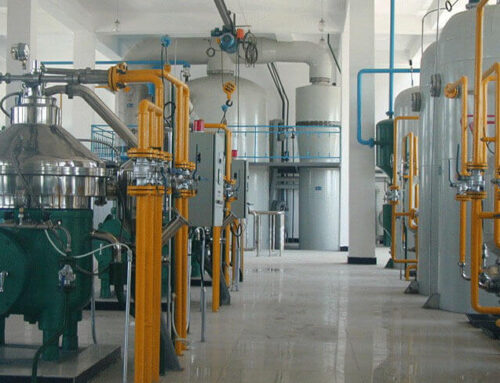
A large-scale soybean oil production plant involves several interconnected processes to efficiently extract oil from soybeans and produce high-quality refined soybean oil. The soybean oil production line includes the soybean pretreatment process, soybean pre-pressing process, soybean oil extracting process, and soybean crude oil refining process. Our advanced soybean oil equipment, such as solvent extractors and automatic control systems, ensures high yields and consistent quality of both crude and refined oil. With capacities ranging from 10tpd to 5,000tpd, our soybean oil production plants are perfect for meeting the demands of large-scale edible oil production requirements.


Why Choose Our Soybean Oil Production Lines
- We can supply complete soybean oil production lines with capacities of up to 5,000 tons per day.
- From soybean pretreatment to soybean oil pressing, soybean oil extracting, and soybean crude oil refining.
- We have 8 large workshops covering 100,000 m2 and over 580 employees.
- 20+ overseas offices and ware shops worldwide. Stable service and support. Overseas installation services & staff training.
- We have built over 100 large oil extraction plants for customers worldwide. Our soybean oil extraction refining lines are running successfully in Nigeria, Mozambique, Bangladesh, Bolivia, Peru, Egypt, Ethiopia, Kazakhstan, Uzbekistan, and other countries.
- Contact us for a free consultation. We are always here to support your soybean oil production.
Take A Glance At Some Of Our Soybean Oil Production Plant Projects.
2,000 tpd Soybean Oil Extraction Plant
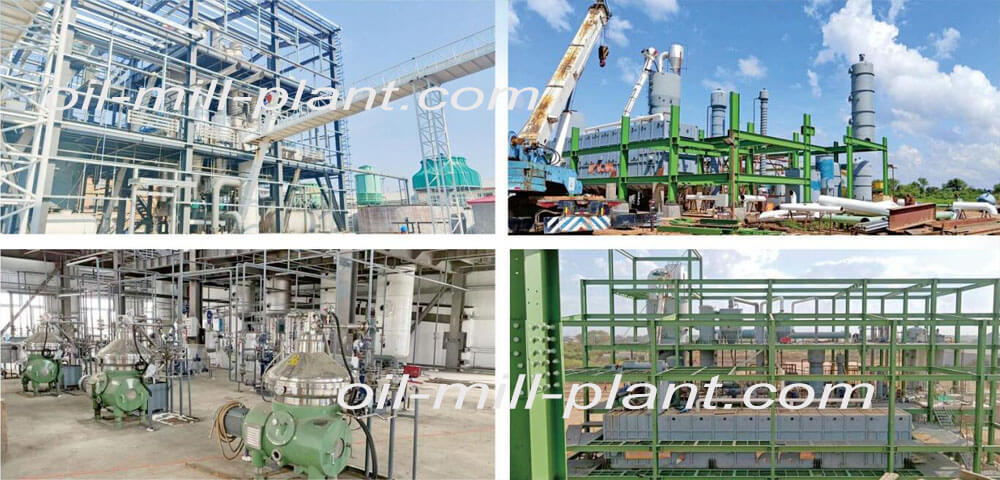
1000 t/d Soybean Solvent Extraction Refining Project in Bolivia

200tpd Soybean Oil Production Plant Project In Iraq

20 t/d Soybean Extruding Pressing Refining Project In Zambia
Soybean Pretreatment Process
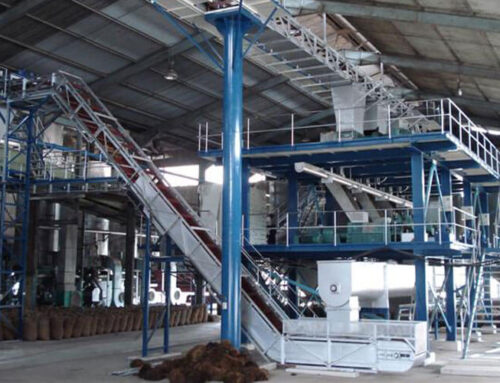
Before soybean oil pressing, the soybean needs cleaning, crushing, softening, flaking, extrusion, etc., which provides conditions for the next step of soybean oil processing.
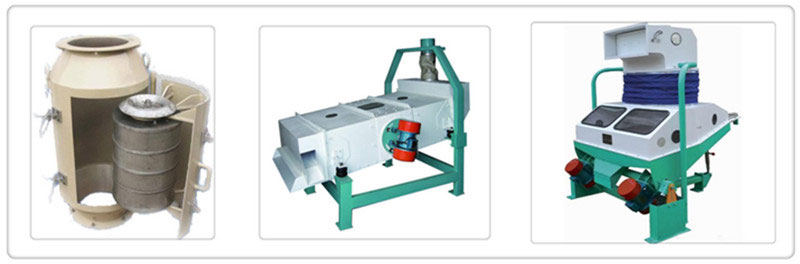
The soybean cleaning process is a screening and stone removal process. It is very important for the soybean oil pre-treatment process.
The High-efficiency vibrating screen is adopted here to remove impurities, effectively achieve the cleaning effect, ensure a good operating environment and stability of production, and simultaneously improve the product quality.
Suction-type specific gravity stoner is used to remove hard impurities like mud and stones.
The magnetic selector is applied to remove metal impurities.
A dust remover is equipped in this process, the suction air net system can effectively control the dust of raw materials and ensure the cleanliness of soybean raw materials.

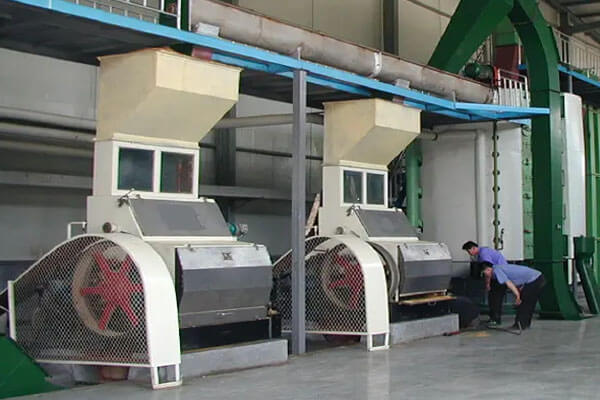
The soybean crushing process facilitates the transfer of temperature and moisture during steaming and frying and improves the steaming and frying effect. To achieve a good softening and flaking effect, the soybean needs to be crushed into 4-6 pieces to ensure uniform granularity. Therefore, when softening, the moisture is uniform and thorough. The flake piece is thin but strong when flaking. The common cracking equipment is a roll crusher, hammer crusher, and disc huller.
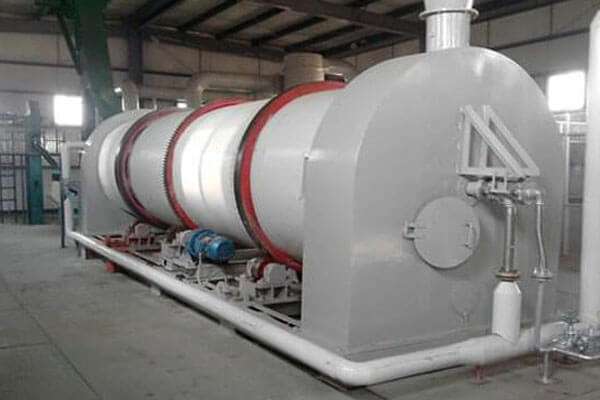
The horizontal soybean softening machine is adopted here to heat the soybean to 50-70℃. Therefore, the plasticity of soybean is increased through adjusting the moisture and temperature, creating good operation conditions for flaking and cooking. The softening process can not only make the flake thin, uniform, and tough but also reduce the nonhydratable phospholipids content in crude oil, which is convenient for the dephosphorization and physical refining of salad oil. Soybean rolling uses the mechanical function to roll the soybean from the granular to the flake.
The cytoderm of soybean is destroyed in this process, meanwhile, the crushed soybean with a certain granularity is made into thin slices with a thickness of 0.3mm, which aims at extracting the maximum oil in the shortest time. Thereby, the extraction speed and rate are increased, and the residual oil in soybean meals is <1%.

Generally, the flake made from a flaking roll has a water content of 12%. However, the optimum moisture for the leaching process is 9%, so effective drying is necessary to achieve the best leaching moisture.
Soybean Oil Pressing Process
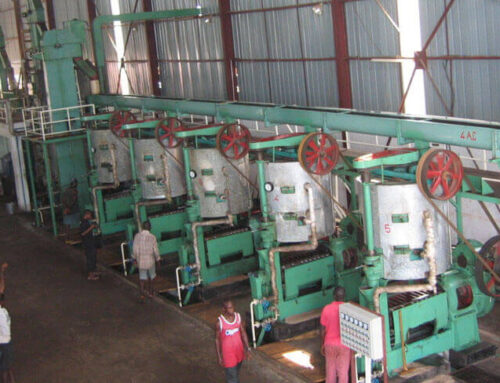
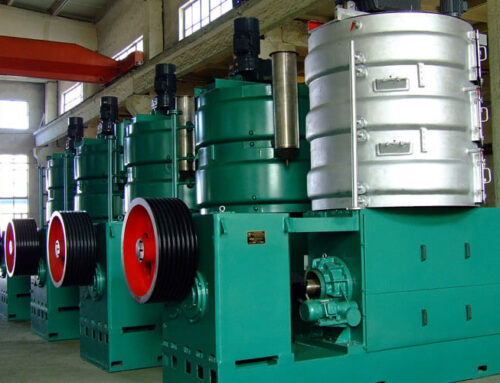
In soybean oil production, the choice between mechanical pressing and solvent extraction depends on factors like plant capacity, oil yield requirements, production costs, and intended uses of the by-products (oilcake/meal). The mechanical pressing method is usually a good choice for a soybean oil mill plant with a capacity under 100 TPD. For small to medium production scales, when residual oil in the cake is acceptable or desirable, and when producing high-value, premium, or organic oils, we recommend using the mechanical soybean pressing method. The oil press machines have a capacity ranging from 10 to 200 tons per day (TPD), and they can extract about 70% of the oil in the soybean.
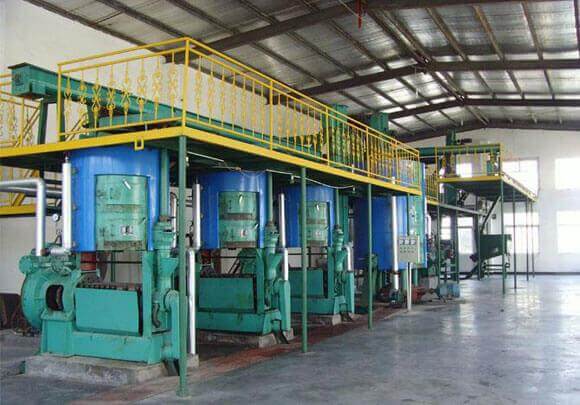
When to Use Mechanical Soybean Oil Pressing
Mechanical pressing uses a screw press to squeeze oil out of the soybean flakes. It’s a relatively simple, lower-cost method, typically suitable for:
Small to Medium-Scale Soybean Oil Production:
Capacity Range: Ideal for soybean oil mill plants with a capacity of up to 100 tons per day (TPD). Mechanical pressing equipment is generally more compact and requires a lower initial investment, making it suitable for small to medium-scale soybean oil mill plants.
High Oil Content Soybeans:
Soybeans with relatively higher oil content may produce good yields with pressing alone. Mechanical pressing can typically extract about 70% of the oil content, leaving some residual oil in the oilcake.
Lower Yield Requirements:
If your goal is not to maximize yield but rather to achieve a balance between oil yield and by-product quality, soybean oil pressing can be appropriate. The residual oil in the pressed soybean cake enhances its nutritional value as animal feed.
Premium Soybean Oil and Organic Soybean Oil Production:
Mechanical pressing is often preferred for producing organic or cold-pressed soybean oils, as it avoids chemical solvents and allows for a cleaner label. The soybean oil produced through pressing retains a natural flavor, making it desirable for certain markets.
Lower Operational and Maintenance Requirements:
Mechanical presses are simpler to operate, clean, and maintain, suitable for soybean oil mill plants with limited technical expertise or smaller teams.
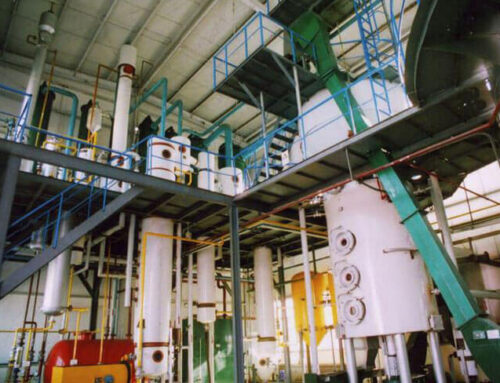
Soybean Oil Solvent Extracting Process
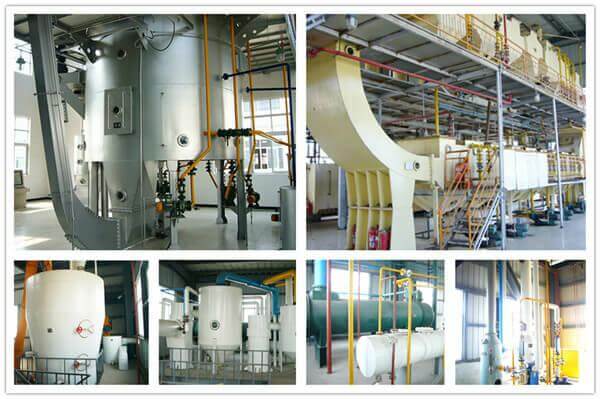
Features of Soybean Oil Solvent Extracting
High oil yield. Residual oil in soybean meals is <1%.
The soybean meal is of good quality.
Low processing cost and low labor strength.
Soybean Oil Extracting Device Classification
Immersion Extraction: pot groups extractor, U-type ball extractor, and Y-type extractor
Percolation Extraction: screen belt type solvent extractor
Combined Extraction: rotocel extractor, loop type extractor
When to Use Soybean Oil Solvent Extraction
Solvent extraction uses a chemical solvent, typically hexane, to dissolve and extract oil from soybean flakes, maximizing oil yield. This method is generally favored for large-scale soybean oil production, high-yield requirements, efficient cost-per-ton output, and when oil mill plants produce high-protein soybean meal for animal feed.
Large-Scale Soybean Oil Production:
Capacity Range: Best for oil mill plants with capacities greater than 50 TPD, often from 100 to 5,000 TPD. Large-scale soybean oil solvent extraction is highly efficient and cost-effective for high-throughput production, ideal for meeting commercial demand.
Low Oil Content Soybeans:
Solvent extraction is effective for soybeans with relatively lower oil content or if maximum oil recovery is required. It can extract 99% or more of the oil content, leaving minimal residual oil in the meal.
High Yield Soybean Oil Requirements:
For maximum profitability, solvent extraction is the preferred method since it allows almost complete oil recovery. This method also enables further processing of the residual meal as a high-protein feed product, increasing overall product value.
Economic Feasibility for High Capacity:
Although soybean oil solvent extraction has higher initial setup costs, it is economical in large-scale soybean oil production where the high yield justifies the investment. Lower residual oil in the meal and solvent recycling reduce long-term operational costs.
Meal Quality for Animal Feed:
Solvent extraction leaves only trace amounts of oil in the meal, which enhances the protein concentration, making it a high-quality feed. This high-protein, low-oil meal is widely used in the animal feed industry, especially for poultry and livestock.
Automation and Efficiency Requirements:
Soybean Oil Solvent extraction plants are typically fully automated, making them suitable for large operations where efficiency and consistent output are critical. Solvent extraction systems also include recovery systems for the solvent, reducing waste and enhancing cost-effectiveness.

CONTACT US FOR A FREE QUOTE
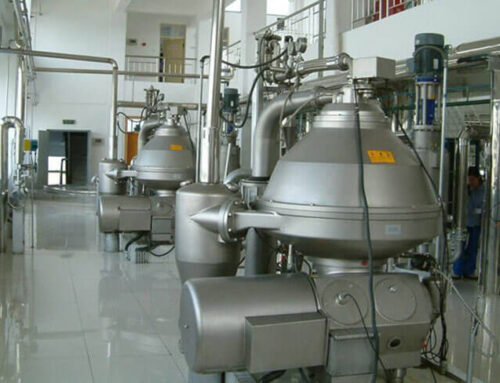
The soybean Oil Refining plant purifies and improves the quality of crude soybean oil by removing impurities, free fatty acids, and undesirable substances like phospholipids, waxes, and pigments. The refined soybean oil is filtered to remove any remaining particles and stored in large storage tanks before being bottled or packaged in containers for market distribution.
Oil Refining Equipment: Degumming tank, neutralizing tank, bleaching clay tank, deodorization tower, dewaxing machine.

The main refining sections are degumming, deacidification, decolorization, and deodorization.

Our Soybean Oil Production Line Advantages
1. Perfect cleaning process: 99% of impurities can be removed, thus reducing mechanical wear and ensuring the soybean quality.
2. Accurate flaking technology: Soybean cell tissue is destroyed. Therefore, the surface area is increased and the trip for oil flow is shortened, which is beneficial to extract the oil and improve the cooking effect.
3. Environmental protection and energy-saving extracting system: Unique exhaust system, better absorption effect, sufficient energy saving design, multiple uses of heat energy, thereby, the steam consumption is saved.
4. High Oil Yield: Solvent extraction methods used in large-scale plants ensure maximum oil recovery from soybeans, resulting in higher yields compared to mechanical pressing alone.
5. Consistent Quality: Automated and refined processes in large-scale production ensure consistent high-quality output of crude and refined oil.
6. Scalability: Designed for continuous operation, these plants can handle high throughput, making them ideal for large-scale commercial production.
7. Efficient Resource Use: Solvent recovery and meal desolventizing reduce material waste, making the process more cost-effective and environmentally friendly.
8. Versatility: The edible oil solvent extraction plants can process various types of oilseeds, adding flexibility to the oil production line.
Have a look at the inside of the soybean oil production lines
50tpd Soybean Oil Mill Plant Project
200tpd Soybean Oil Extraction Refining Plant

Let’s Start Your Soybean Oil Production Project
Soybean is valued for its high protein content (38-45%)) as well as its oil content (approximately 20%). Soybean oil is a vegetable oil extracted from the seeds of soybean, which has a mild nutty flavor and a better texture. It is one of the most widely consumed cooking oils, constituting about half of worldwide edible vegetable oil production. As a semi-drying oil, processed soybean oil is also used as a base for printing inks and oil paints. Thus soybean oil production line is installed worldwide.
If you are considering a soybean oil plant, just feel free to contact us. We are always here to support your edible oil production business. We offer you a complete soybean oil production line and build a turnkey soybean oil production project including soybean oil pretreatment, soybean oil extraction, and soybean oil refinery plant.