Edible Oil Dewaxing/Fractionation/Winterization Process Overview
Dewaxing is an essential part of improving the quality of cooking oil, which is closely related to degumming, deacidification, bleaching, and deodorization processes. The presence of wax mainly affects the palatability of oil, so the main purpose of dewaxing is to improve the palatability of oil; increase the oil sensory such as transparency, and smoke point; improve the body’s digestion and absorption of oil, and benefit the comprehensive utilization of wax. In short, oil dewaxing adopts forced cooling to make the high melting point wax & solid oil precipitate out from liquid oil and then use the method of filtration or centrifugal separation to remove them. Different oils have different wax content. It is almost necessary to dewax the following products (such as corn oil, rice bran oil, sunflower oil, cottonseed oil, etc.).
Oil fractionation is done by using the differences in glycerol’s melting point and solubility contained in various oils to divide the oil into solid fats and liquid oils.
In theory, oil dewaxing (winterization) and oil fractionation seem to be different, however, their process principle, process technology, and the processing equipment they used are the same.
Edible Oil Dewaxing Process
Common Raw Edible Oil for Dewaxing and Winterization: Sunflower oil, corn oil, rice bran oil, cottonseed oil, etc.
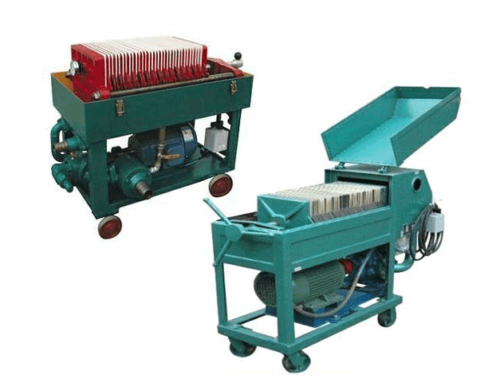
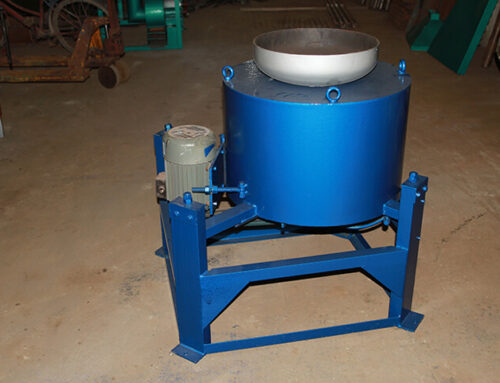
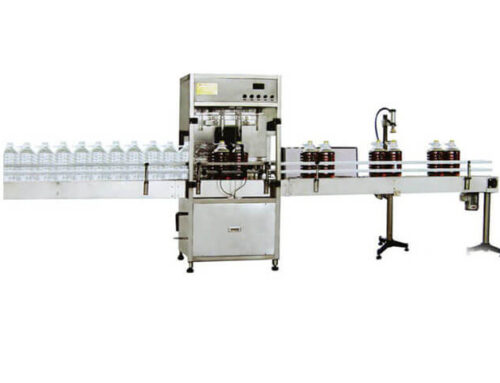
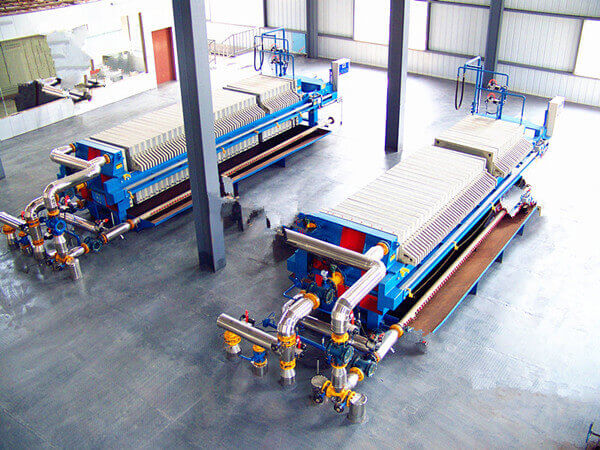
Main Edible Oil Dewaxing Equipment: Cooling system. Heat exchanger. Crystallizing tank. Maturing tank. Filter
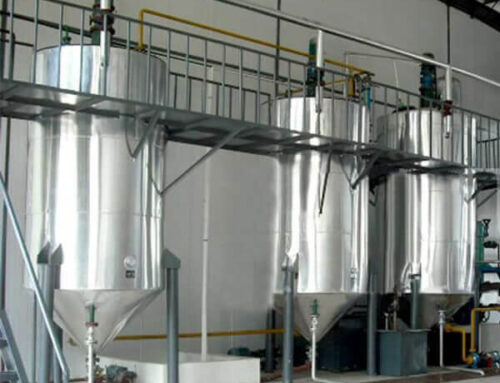
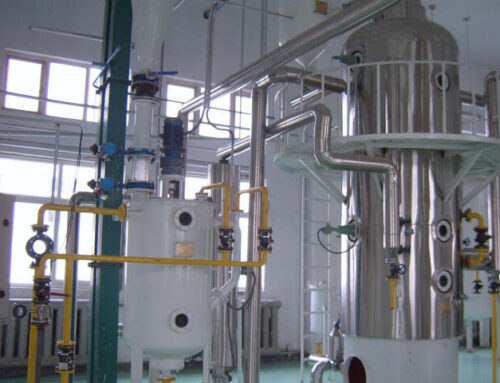
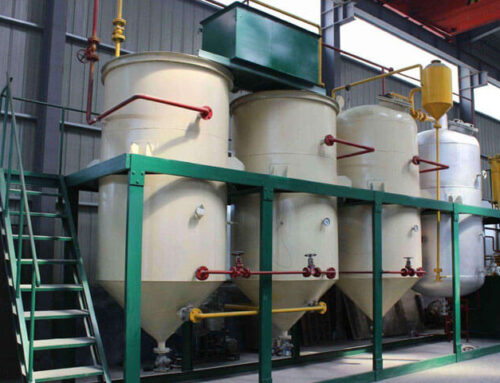
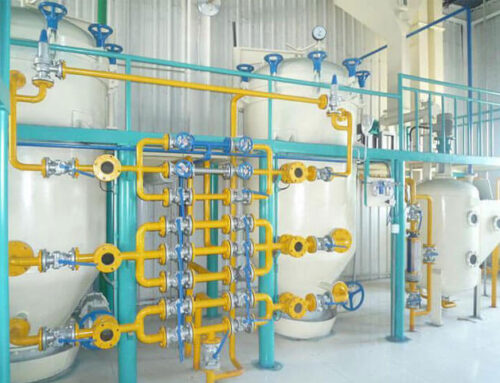
Edible Oil Dewaxing Equipment

Precautions for Cooking Oil Dewaxing Machine
- Before cooling, oil should be heated to make the wax that has been precipitated at room temperature(wax precipitates when room temperature is lower than the crystallization temperature.) completely dissolved in oil liquid, which can enhance the following dewaxing effect.
- The oil cooling speed should be even which shouldn’t be too fast.
- After cooling for 72 hours, the crystallized wax needs to be matured for 12~16 hours to make it grow big.
- When separating, you can use two plate filters for filtering to keep continuous working.
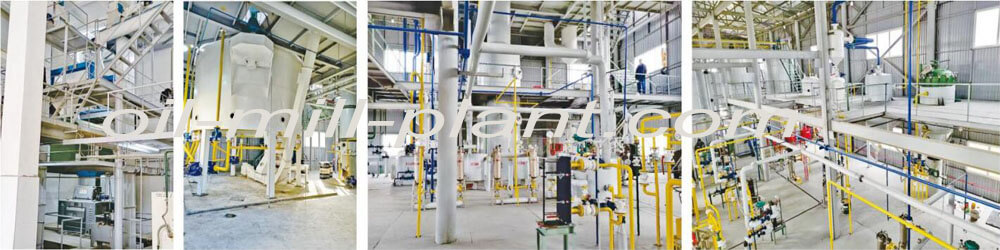
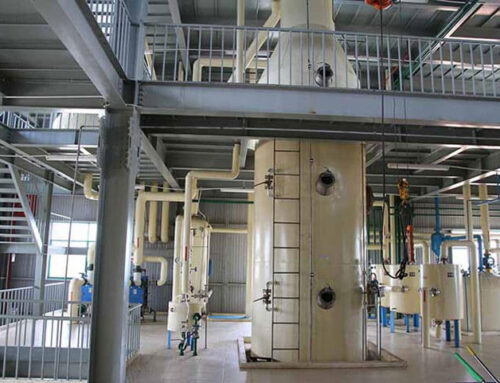
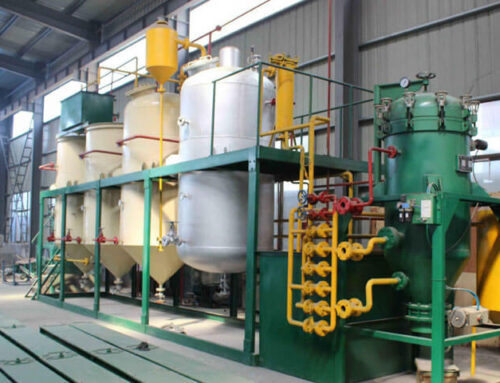
200 TPD Edible Oil Extraction Continuous Refining Dewaxing Project
Main Steps of The Edible Oil Dewaxing Process
Conventional dewaxing is the common oil dewaxing method with the working principle of freezing and then mechanically separating oil & wax without any auxiliary means, the separating methods are usually pressure filtration, vacuum filtration, and centrifugal separation. Conventional dewaxing is the simplest oil crystallization and filtration method.
First of all, the oil crystallization is carried out in the cooling chamber at 0~4℃, after 72 hours of cooling, the final oil temperature in the oil tank is around 6~10℃. The average cooling rate is 2℃/hour at the first 24 hours of the cooling period, the cooling rate of the next 24 hours is 0.5℃/hour and the last 24-hour’ cooling rate is 1~2℃/hour. Then, the oil and precipitated wax crystals are separated by bag filtration in the filtration room at 15~18℃, and the filtration time is around 10~12 hours. The available filtration bags are polyester card, cotton, or cotton fabric, and their filtering speed is polyester card>cotton>cotton fabric.
At present, most of the oil refining plants are cooling, crystallizing, and plate filters separating oil from the wax paste. Oil such as sunflower seed oil contains less wax which could be dewaxed by cooling to 10~15℃ for 2 days and then pumping to the plate filter with compressed air. The dewaxing effect is good with a wax content in dewaxed oil is only ten milligrams per kilogram. In general, conventional dewaxing is simple and cost-effective, but the wax separation is not complete and has a high cloud point which could be through crystallizing filtration twice.
Edible Oil Fractionation Process
Common Edible Oil for Fractionation: Vegetable oils such as palm oil, palm kernel oil, coconut oil, and special oils such as salsalate resin, shea butter, mango resin, and so on.
Edible Oil Fractionation Equipment: Crystallization tank, crystal maturing tank, heat exchanger, membrane filter, heating unloading cake filter.
Features of Oil Fractionation Equipment: Food-grade stainless steel case. Corrosion-resistance. Stable performance. High efficiency and energy-saving.

Edible Oil Fractionation Equipment
Main Steps of the Edible Oil Fractionation Process
 The purpose of oil fractionation is to develop & utilize solid fats, obtain solid fats with a higher degree of saturation, improve the storage performance of liquid oils at low temperatures, and obtain liquid oils with a lower degree of saturation. According to the characteristics of the cooling crystallization and separation process, the edible oil fractionation process is divided into the conventional method, the surfactant method, the solvent method, and the liquid-liquid extraction method. The more widely used process is the conventional method, also known as dry fractionation, and its processing steps are mainly heating, cooling crystallization, and filtering.
1. Heating
Raw oil such as palm oil is in a semi-solid state at room temperature, which is generally heated to about 70℃ prior to crystallization to destroy all existing crystals.
2. Cooling crystallization
Cooling crystallization is a key step of dry fractionation if the crystallization is successful, the separation is easy. Therefore, the design of the crystallizer is particularly important, which should have its own cooling exchange surface, cooling system, and mixing structure characteristics. During processing, cooling efficiency and orderliness are the decisive factors to ensure the crystal’s formation and filterability. Only in this way can we produce stable, uniform, and filtrable crystals. The specific operation is by setting the temperature difference between oil & cooling water and cooling time to control the cooling process in the state of stirring and circulating water cooling, and then the crystal nucleus forms and grows. When the required temperature is reached (depending on the desired amount of soft fat, typically 20℃), cooling is stopped.
3. Filtering
Though cooling crystallization is important, the choice of filtration equipment also has a great impact on the yield of liquid oil. The filtration system that is currently used in industry is the following: drum filter, continuous belt vacuum filter, and membrane filter. In the past ten years, the membrane filter has been widely used with a high proportion of soft fat extracted from raw material(70% ~ 75%), while drum filter and continuous belt vacuum filter have a low yield of soft fat (typically only 65%).


Oil Dewaxing and Fractionation Distinction
- Oil dewaxing and fractionation are based on the same principle, but they have different purposes. Dewaxing is by removing wax content to improve the palatability and quality of the oil. Fractionation is by using the differences in glycerol’s melting point and solubility to obtain solid fats & liquid oils from raw material.
- During oil dewaxing winterization, oil is kept at low temperatures for some time and then filtered to remove solid impurities that can cause liquid oil to become cloudy.
- Oil fractionation is a modified process, which involves a larger change in the material components, and improves the physical properties of the oil product. For example, fractionated coconut oil contains a large amount of medium-chain fatty acids like caprylic acid (C8) and capric acid (C10) that may lead to modest weight loss and provide several other health benefits.